Buying Guides · 6 min read
The Best Shed for an Allotment: Rules, Size & Security
Check the rules before you buy: allotment shed size caps, windowless security, bases without concrete and delivery through a locked gate.
For Plot Holders
The Best Shed for an Allotment
Size caps, no-concrete rules, windowless security and delivery through a locked gate — everything to get right before you spend a penny.
Here's the first rule of allotment sheds, and it has nothing to do with timber: read your site agreement before you buy anything. Almost every council and allotment association caps shed size — 6x4 and 8x6 are the common ceilings — and plenty also restrict height, colour or position on the plot. Many ban permanent concrete bases outright.
None of that is a problem if you know it up front; it's an expensive one if you find out after delivery. Dig out the agreement, have a word with the site secretary, then choose a building that fits the rules rather than fights them.
Getting it right in five steps
Rules first, shed last.
- 1
Check the rules
Read your tenancy agreement, then confirm with the site secretary. You're looking for four things: maximum size, maximum height, colour rules, and where on the plot buildings may stand.
Careful: If the paperwork says 6x4, that's the answer — nothing in this guide overrides it.
- 2
Pick a size under the cap
Most sites cap sheds at 6x4 or 8x6. Take the largest size your agreement allows — allotment sheds fill up fast — and measure the actual spot, including any gap required from paths and neighbouring plots.
Tip: Wall hooks and one slim shelf make a 6x4 work far harder than its floor area suggests.
- 3
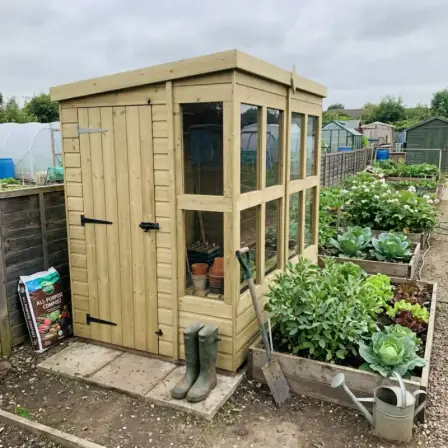
Choose windowless or potting
A tool store should be windowless — nothing to see means nothing worth smashing. If you spend whole days up there sowing, glazing and a potting shelf earn their keep, provided windows are allowed.
Tip: Be honest: most plot holders need a secure store, not a greenhouse.
- 4
Sort a base the site allows
Most agreements ban permanent concrete. A pressure-treated timber base kit or plastic grid base is usually the allowed route — it sits on levelled ground, keeps the floor off wet soil, and lifts out cleanly if you give up the plot.
Tip: A concrete slab becomes the next tenant's problem — exactly why sites ban them.
- 5
Plan the delivery
Check when vehicles can get on site, how wide the gate is, and how far panels travel from the car park — they can usually be barrowed to the plot. Tell us about the site when you order and we'll plan around it.
What an allotment shed actually needs
Tanalised timber, not a coat of paint
Nobody re-treats an allotment shed on schedule. Pressure-treated framing and shiplap carry protection through the timber, not just on it.
Windowless security
No glazing means nothing to peer through and nothing to smash — the biggest single security upgrade on a site that's empty most of the week.
A base that isn't concrete
A pressure-treated timber base kit sits on levelled ground, satisfies the no-concrete rule, and comes with you if you ever change plots.
A water-butt-ready roof
Guttering into a butt works off felt or an EPDM rubber roof alike — often allowed, always useful, and it saves a hundred trips to the trough.
A pent roof under the height cap
A pent roof's low profile clears height limits easily without giving up wall space for hooks and shelving.
The honest storage rule
Store it up there
- Spades, forks and hoes — marked with your name or postcode
- Canes, netting, fleece and cloches
- Watering cans, hose and the wheelbarrow
- Pots, trays and opened compost
- A spare kettle and a folding chair
Take it home
- Battery and power tools
- Petrol strimmers and mowers
- Quality hand tools you'd hate to replace
- Anything still in its box
- Anything you'd cry about losing
Windows, hooks and the truth about security
An allotment shed spends most of its life alone, and that should shape every choice. A windowless security shed gives an opportunist nothing to work with: nothing to see, nothing to smash. Add a proper hasp and a decent padlock, fitted before the first tool goes in. Then the golden rule: don't store anything you'd cry about losing — mark what stays, take the expensive kit home.
Inside, the walls beat the floor. Tool hooks keep spades and forks up, visible and off the boards, leaving the floor clear for the barrow. If windows are allowed and wanted, put a potting shelf at the window end — and if you're up there whole days in all weathers, a dedicated potting shed is the honest answer.
Whichever you choose, insist on tanalised timber — nobody walks down with a brush and preserver on schedule. And where height limits bite, a pent shed stays comfortably under them.
The base: no concrete, no problem
Sites ban permanent bases for a sensible reason — plots change hands, and nobody wants to inherit half a tonne of someone else's concrete. The good news is you don't need it. A pressure-treated timber base kit or plastic grid base does everything a slab does here: spreads the load, holds the building level, keeps the floor off wet soil — and it lifts out and moves with you if you give up the plot.
Preparation is a morning's work with a spade and a spirit level — our step-by-step base guide covers clearing, levelling and squaring the ground.
Getting it through the gate
Delivery is free across the UK mainland, but allotments add wrinkles: locked gates, set opening times, tracks never meant for a lorry. Check gate width and vehicle access before you order — panels can usually be barrowed from the car park to your plot. The detail lives on our delivery page, and if your site is awkward, get in touch and we'll work out the route together.
Allotment shed questions, answered
Do I need permission to put a shed on my allotment?
Almost always, yes. Your tenancy agreement sets out what's allowed, and most sites want a nod from the committee before anything goes up. Ask first — five minutes of conversation prevents an expensive mistake.
What size shed is usually allowed on an allotment?
Caps of 6x4 or 8x6 are the most common, but every site sets its own limit and some restrict height too. Check your agreement rather than assuming.
Can I lay a concrete base on my allotment?
Usually not — most agreements ban permanent bases because plots change hands. A pressure-treated timber base kit or plastic grid base does the same job and lifts out if you ever leave the plot.
How do I stop my allotment shed being broken into?
Plan for a site that's empty most of the week: a windowless shed so there's nothing to see, a proper hasp and decent padlock, marked tools, and anything valuable taken home. A shed with nothing worth stealing rarely gets a second look.
Will you deliver to an allotment?
Yes — free across the UK mainland. Allotments have locked gates and limited vehicle access, so tell us about the site when you order: panels can usually be barrowed from the car park. If access is unusual, contact us first.
Before you order
Ten minutes with this list saves weeks of bother.
- Read your tenancy agreement for size, height, colour and position rules
- Confirm the size cap with the site secretary — in writing if you can
- Measure the exact spot, including gaps from paths and neighbouring plots
- Confirm concrete is banned (it usually is) and plan a timber or grid base
- Decide: windowless for security, or glazed with a potting shelf if allowed
- Check gate width, opening times and the barrow distance from the car park
- Buy the hasp and padlock before the shed arrives
- Decide what stays at home — power tools, petrol kit, anything you'd cry about losing
Build a shed that fits your plot — and your rules
Set the exact size your agreement allows, go windowless or glazed, and keep a pent roof under the height cap — tanalised throughout, made in our West Midlands workshop.
Open the Build StudioReady to put it into practice? Every building is made in our West Midlands workshop with free mainland delivery.
Browse buildings →