Technical Installation · 7 min read
Potting Shed Installation & Setup: From Base to Bench
Half shed, half greenhouse: how to site, base and assemble a potting shed — then set up the bench, staging and ventilation so it earns its keep.
Half Shed, Half Greenhouse
Installing a Potting Shed, From Base to Bench
Glazing on one side, storage on the other, a bench in between. How to site, base and assemble it — then set up the inside so sowing season runs like clockwork.
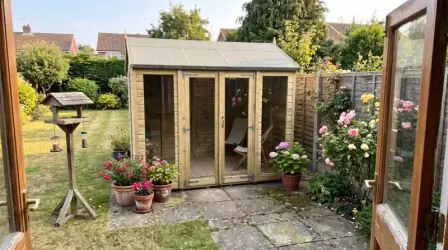
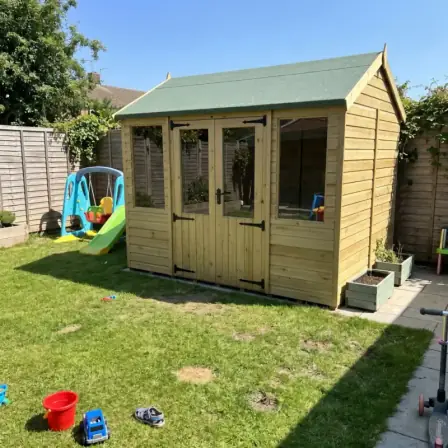
A potting shed is the most honest hybrid we build: one side is a shed, the other is halfway to a greenhouse, and the bench in the middle is where the gardening actually happens. That mix raises two questions a standard shed never asks — which way do the windows face, and is the base true enough to keep a glazing line straight?
This guide covers both halves: siting, base and assembly first, then the part most guides skip — setting up the inside so a February sowing session doesn't start with twenty minutes of shuffling. It applies to any potting shed; wherever your building's own manual differs, the manual wins. Weighing a fully glazed building instead? See our greenhouse installation guide.
What makes a potting shed different
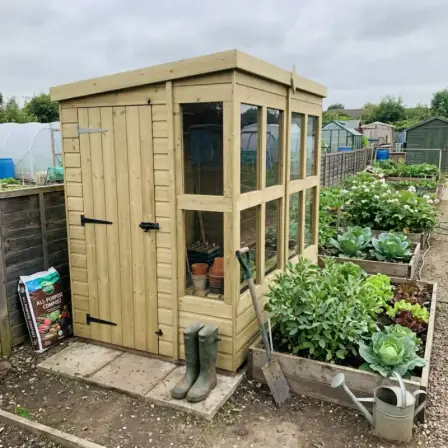
A glazed growing side
One long wall carries the windows, so light falls across the bench where you're pricking out. It's why orientation matters here and doesn't on a tool store.
A right way round
A plain shed faces wherever the path suggests. A potting shed has a bright side and a solid side — swap them and you lose light every day.
Still a shed at heart
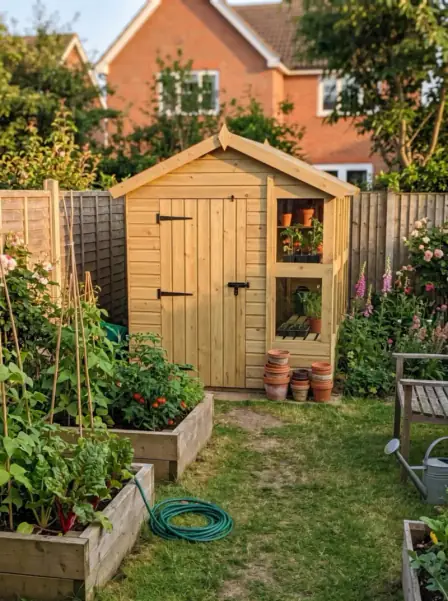
Tanalised framing, tools on hooks, compost in bins — one good potting shed replaces a shed and a cold frame in a single footprint.
Siting: chase the morning light
The classic advice is to face the glazing due south, and for a greenhouse that's fair. For a potting shed we'd nudge you east or south-east: morning light warms the bench for the hours you're actually at it and wakes trays gently, without cooking the place by early afternoon the way a full-south wall of glass can in June. South still works — just expect to shade and water more in high summer. North-facing glazing is the last resort: fine for potting up, dim for seedlings.
Before you commit: a potting shed drinks water, so site it where a downpipe can feed a water butt, on the same side as the door you'll use. And stay clear of overhanging trees — drips streak the glass, leaves choke the gutter, shade defeats the windows.
The base: level matters more here
Every shed wants a flat, level base; a part-glazed building insists on one. Timber framing tolerates a slightly proud corner with nothing worse than a sticky door — glass won't. A frame sitting in a twist puts panes under stress, and the long sightline of a glazed wall shows every millimetre the base is out.
It's the same job done carefully: concrete, slabs or a pressure-treated timber base, flat and level to within 10mm. Our base preparation guide covers the ground-up method, the shed base guide compares the options, and the timber base installation guide walks it through peg by peg.
Assembly: notes for a part-glazed building
Your building's manual has the exact sequence — these are the habits that matter more when panels carry glass.
- 1
Pick a calm, dry day
A glazed panel in a gust is a sail with consequences, and wet glass is no way to get a grip. If the forecast argues, wait.
- 2
Two people, panels on edge
Carry glazed panels upright, never flat — glass is strong in its plane, weak across it. One steadies, one fixes, nobody hurries.
- 3
Snug first, all round
Stand the walls with fixings firm but not final — leave a few millimetres of movement for the step that matters.
- 4
Square the frame before you trust the glass
Measure both diagonals until they match, check the door swings freely, sight along the glazed wall for a straight line — then tighten. If your building glazes on site, the glass goes in after this step, never before.
Careful: Tighten a racked frame and the twist is built in for good — the glazing won't forgive it.
- 5
Roof, trims and silicone
Roof on in the calm you picked, then trims and a neat silicone bead around every pane. Watertight is the job; tidy is the standard.
- 6
Treat anything you cut
A saw cut is fresh, unprotected wood. Dab preservative on every cut and hole — two minutes that keep the 15-year anti-rot guarantee exactly as written.
The setup half: a bench that runs like a workshop
Here's where a potting shed earns its keep. The difference between a building you sow in and one you shuffle around in is a single morning of deliberate setup.
Start with the bench, under the glazing, at a height you can work without stooping. Then arrange everything around one flow: compost on one side of you, the work in front, finished trays on the other. Compost lives in a lidded bin at bench-end — scoop, don't lug bags. Pots stack by size within reach; sown trays go straight onto staging in the light without taking a step. Tools keep to the solid side: long handles on hooks, hand tools on a rail, floor left clear. Speccing from scratch? Sketch the bench wall first and let the rest follow — the order we'd use in the Build Studio.
What lives where
The glazed side
- The potting bench, directly under the windows
- Staging for seed trays, with air space between
- The propagator at the brightest end
- Labels, dibber and hand tools on a rail within reach
The solid side
- Long-handled tools on wall hooks, off the floor
- Compost and grit in lidded bins
- Pots and trays stacked by size
- Feed, string, fleece — and the radio
Air moves, seedlings live
Still, damp air is the quiet killer in any glazed building. Damping off — the fungal collapse of new seedlings — thrives where moisture sits, and a shut potting shed in a mild, wet week is exactly that. The cure costs nothing: open the window or door for a spell most days, even in winter — late morning, once any frost has lifted. Water in the morning so everything dries by evening, water compost rather than leaves, and give trays room on the staging. A part-glazed building is easier to keep aired than a greenhouse, but the habit is the same.
Overwintering, honestly
An unheated potting shed delays frost; it doesn't defeat it. The glazing gathers daytime warmth, the walls hold some of it, and most cold nights the inside stays a few degrees kinder than the open garden — enough to see borderline-hardy plants through an average winter and keep stored tubers dry. In a hard, prolonged freeze the cold gets in; it just arrives a night or two later.
So plan for what it is: pots off the floor, clustered on staging away from the glass, fleece over the tender ones when frost is forecast, and winter watering kept sparse — cold and wet kills more overwintered plants than cold alone. Anything genuinely tender wants heated glass or a windowsill indoors, not promises from an unheated building.
Potting shed questions, answered straight
Which way should a potting shed face?
Glazed side east or south-east — gentle morning light on the bench without the summer overheating a full-south wall of glass invites. South works if that's what the garden gives you; north-facing glazing is a last resort.
Does a potting shed need a different base from a normal shed?
Same options — concrete, slabs or a pressure-treated timber base — but a stricter standard. A twist a plain shed shrugs off will show along a glazed wall and stress the panes: flat and level to within 10mm.
Can I overwinter tender plants in an unheated potting shed?
Borderline-hardy plants, yes — with fleece, dry compost and pots off the floor, it buys a few useful degrees. Genuinely tender plants, no: in a hard freeze an unheated building loses the fight, just later than the garden.
Should I buy a potting shed or a greenhouse?
If growing is the whole point and storage lives elsewhere, a <a href="/shop/type/Glass%20Houses">glass house</a> wins on light. If one building must sow, store and give you a dry bench in any weather, it's the potting shed.
Setup day: before the first seed tray
- Bench under the glazing, set so you can work without stooping
- Compost in a lidded bin at bench-end — scoop, never lug
- Water butt plumbed to the downpipe, watering can by the door
- Hooks and rails up before the floor starts filling
- A max-min thermometer somewhere you'll actually read it
- Fleece stored dry, ready for the first frost warning
A bench with your name on it
Hand-built in our West Midlands workshop since 1995 — tanalised framing with a 15-year anti-rot guarantee, a glazed growing side and free UK mainland delivery.
Browse Potting ShedsReady to put it into practice? Every building is made in our West Midlands workshop with free mainland delivery.
Browse buildings →