Design Inspiration · 7 min read
How to Create a Cosy Garden Retreat
A craftsman's guide to a quiet room at the bottom of the garden: choosing between shed and summerhouse, siting for evening sun, and staying comfortable honestly through a British year.
A Room of Your Own
How to create a cosy garden retreat
Which building, where to put it, and how to keep it genuinely comfortable through a British year — from the people who build them.
The most restful room you'll ever own might be twenty steps from your back door: a small, deliberate building at the bottom of the garden with a chair, a lamp and a view. A reading room. A hobby bench. A place to carry a pot of tea and watch the light go off the borders. We've been hand-building these retreats in our West Midlands workshop since 1995, and the brief hardly changes: somewhere quiet, somewhere comfortable, somewhere that isn't the house. This guide covers the building, the spot, and honest comfort in a UK climate — not just two golden weeks in July.
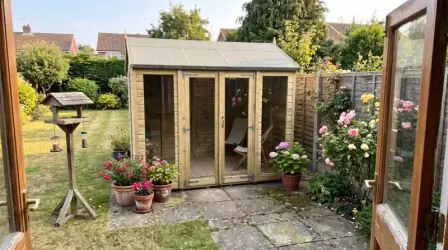
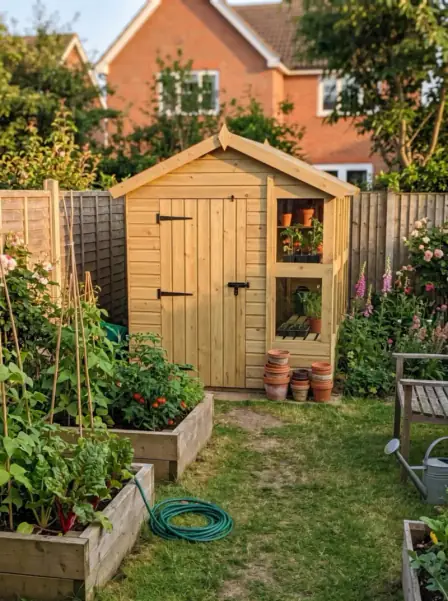
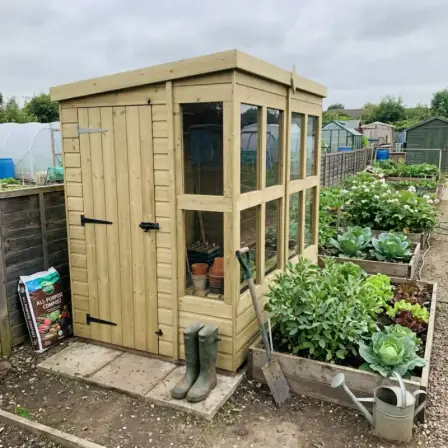
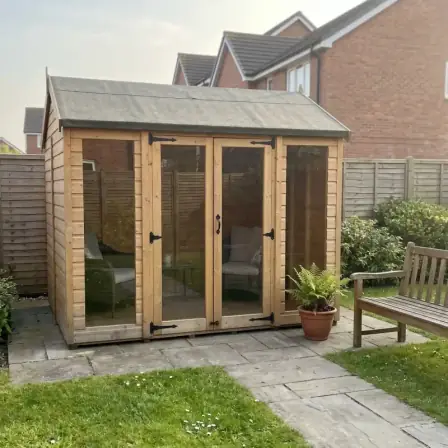
Two questions choose the building. The first is light or privacy. If the retreat is about the view — tea, a book, the garden framed in glass — a summerhouse is the natural fit: generous glazing, wide doors, the room angled at the borders. If it's about retreating — a hobby bench, a snug den nobody can see into — a shed does it beautifully for less, and every solid wall is shelf space. The full comparison is in our shed vs summerhouse guide.
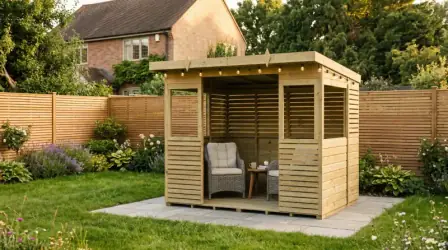
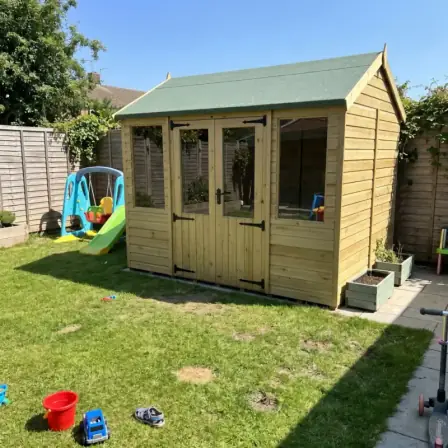
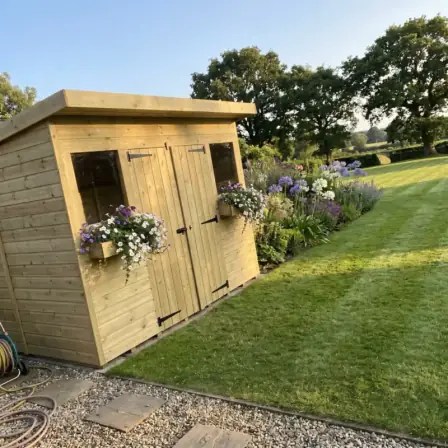
The second is how the roof should feel. An apex puts its height down the middle, giving even a modest building a vaulted, cabin-like generosity. A pent slopes one way, reads cleaner and more modern, and lets us set windows high on the tall wall — daylight without being overlooked. Neither is right; they feel different, and feel is the point here.
Either way the bones are the same: tanalised (pressure-treated) timber framing with our 20-year anti-rot guarantee, or a composite building whose cladding carries a 30-year manufacturer warranty if you'd rather never lift a paintbrush.
Siting: get this right before you order
- 1
Walk the garden at six in the evening
A retreat earns its keep on summer evenings, so find where the last of the sun lands and claim it. Watch across a week — shade from the house and next door's trees travels further than you'd think.
- 2
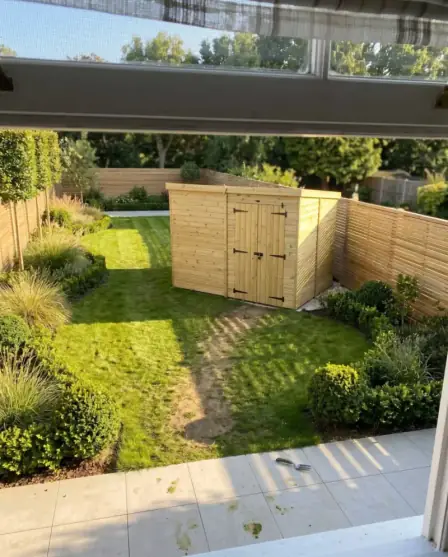
Face the view, not the fence
Turn the doors and main glazing back down the garden, so the picture from your chair is your own lawn and borders, not a fence panel two feet away. The bottom of the garden buys you the longest view you own.
- 3
Leave it room to breathe
Keep a working gap behind and beside the building — enough to walk, treat the timber and let air move. A retreat pushed hard into a hedge stays damp on that side, and damp is the enemy of cosy.
A planning note while you're pacing the lawn: most garden retreats go up under permitted development without an application, but within 2m of a boundary the height limit is 2.5m — exactly where a pent roof earns its keep. The detail and the exceptions are in our planning guide.
Now let's be honest about winter. A single-skin timber building, unheated, sits close to the outdoor temperature. The walls take the sting out of the wind and the roof keeps you dry, but timber alone is not insulation. From March to November a retreat is a joy with no help at all; in the cold months you warm it for the hours you're in it — it won't stay warm. If you need an insulated, lined, work-all-day space, that's a different project — name it honestly before you buy.
Within those limits, the biggest difference isn't heat, it's draughts. A brush strip on the door bottom, a heavy curtain across the inside of the door, and a proper rug will change how the room feels more than doubling a heater's wattage. But never chase airtight: an unheated building has to breathe, or moisture settles and mould follows. Vents stay open; the curtain and the rug do the comfort.
And keep the roof ahead of the weather. We fit EPDM rubber membrane — one sheet, no seams to fail, a life expectancy of around 50 years — and rain drumming softly on a rubber roof is quietly one of a retreat's best features. More at Total Rubber Roofing.
Heating a timber retreat, honestly
Safe and sensible
- A small oil-filled radiator or panel heater with a thermostat — low wattage is plenty
- A plug-in timer, so the room is warm when you arrive
- A tubular heater under the bench for winter frost protection
- A heated throw — it warms the reader, not the rafters
- An outdoor-rated supply installed by a qualified electrician, if you want mains
- A hot water bottle and a full teapot — the original off-grid heating
Never in a timber building
- Bottled-gas or paraffin heaters — moisture, fumes, fire risk
- A domestic extension lead trailed out of a window and across a wet lawn
- Any heater left running unattended or overnight
- Wet coats draped over a heater to dry
- Sealing every gap airtight — the building must breathe or mould moves in
- Candles left burning when you walk back to the house
You don't need mains power to make it glow. Solar festoons along the eaves, a rechargeable lantern or two, and battery candles on the shelf will light every evening you'll realistically spend out there — choose warm white and it's all glow, no glare. Keep them on a hook by the back door so they charge indoors between visits. A kettle or sockets? That's the electrician's job from the list above.
Furniture in an unheated building lives by one rule: solid materials survive, chipboard doesn't. Solid timber, rattan and metal-framed pieces take the humidity swings of a British year without complaint; flat-pack chipboard swells the first damp spring and never recovers. Cushions in outdoor fabric can live out there; anything precious walks down with you and back. We've covered furnishing properly, style by style, in our summerhouse interior guide.
What tips it from shed to room is the last layer, and it's small: paint the inside a light, calm colour; a proper doormat; a lamp on the table; one picture; a tray for the teapot and a tin with a lid for the biscuits — mice are optimists. Add a clock with no alarm and a blanket over the chair arm, and you'll invent reasons to be down there in February. When you're ready to shape the building around that chair, the Build Studio places every door and window panel by panel.
Garden retreat questions, answered straight
Can an unheated timber building really be comfortable in winter?
Comfortable for the hours you're in it, yes. Set a low-power heater on a timer twenty minutes before you head down, keep the draughts out and the layers on, and a bright January afternoon out there is a genuine pleasure. What it won't be is a living room that holds warmth all day — think of it as a three-and-a-half-season room, honestly described.
Shed or summerhouse for a reading room?
Ask whether the room is about the view or the disappearing. Garden framed in glass while you read: summerhouse. Vanishing into an armchair with a lamp and nobody able to see in: a shed with one well-placed window is snugger, more private and easier on the budget.
How do I get power to the bottom of the garden?
For light, you may not need to — solar and rechargeable lamps cover evening use with no wiring. For a kettle, a heater or sockets, you need an outdoor-rated supply on armoured cable, installed and certified by a qualified electrician. Done properly it isn't a big job; improvised with extension leads it's a hazard.
Before you order: the retreat checklist
- Walked the garden at six and found where the evening sun lasts
- Chosen light (summerhouse) or privacy (shed) — and apex height or pent lines
- Doors and glazing facing back down the garden, not at the fence
- Under 2.5m tall if it sits within 2m of a boundary
- A working gap left around the building for air and maintenance
- Low-power heating on a timer — and nothing gas-fired, ever
- A rug, a curtain across the door, and one chair you'd defend
Design your retreat in the Build Studio
Pick the footprint, choose timber or composite, and place every door and window panel by panel. Hand-built to order in our West Midlands workshop, delivered free across the UK mainland.
Open the Build StudioReady to put it into practice? Every building is made in our West Midlands workshop with free mainland delivery.
Browse buildings →