Design Inspiration · 6 min read
Summerhouse Interior Ideas That Actually Work All Year
Summerhouse interior ideas that work in a real glazed garden room: floors, furniture that survives, lighting without mains and five styles to steal.
Interior Ideas
Summerhouse interiors that actually work
Rugs, furniture that survives, light without mains and five styles worth stealing — honest ideas for a glazed garden room, from the people who build them.
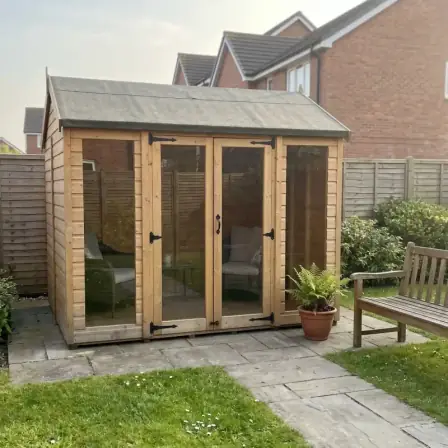
A summerhouse is a glazed, uninsulated garden room. That's not the small print — that's the brief. Furnish it like a spare bedroom and you'll be carrying swollen flat-pack furniture to the tip by October. Furnish it for what it actually is and you get the best-lit room you own, in daily use for three seasons and stretching happily into a fourth. We've been building them in our West Midlands workshop since 1995, and this is the advice we give at handover.
Everything below follows one rule: the glazing is the point — every choice should push more garden and more light into the room, never less. (Still choosing the building itself? Size one up in the Build Studio first.)
Five style directions worth stealing
Coastal
Whites and off-whites, striped cushions, a pale outdoor rug — the glazing does the sea-light for free.
Potting-shed chic
A scrubbed workbench, terracotta pots on shelves, botanical prints — half retreat, half working room.
Reading den
One proper armchair, one good lamp, one shelf within arm's reach. Ruthlessly simple, endlessly used.
Tea house
A low table, floor cushions in outdoor fabric, doors thrown open to the garden — calm by design.
Studio
An easel or desk turned to the steadiest light, tools on wall hooks, the floor kept clear.
Furnish it in a weekend
Work in this order — floor, seating, light, walls, then the soft layer — and each step makes the next one easier.
- 1
Start with the floor
A rug over the timber floor transforms the feel of the whole room in one move — it softens footfall, warms the look and anchors the seating. Choose an outdoor-rated rug: the woven polypropylene sort shrugs off damp springs and can be hosed down on the lawn come May.
Tip: Go bigger than you think. The front legs of every seat should sit on the rug.
- 2
Choose seating that survives
Solid wood, rattan and metal-framed furniture take the humidity swings of an unheated room in their stride. Add cushions in outdoor fabric and simply carry them indoors over winter. Mind the walking room too: an 8x8 seats two or three comfortably, while a 10x10 takes a proper seating group.
Careful: Skip particleboard and flat-pack. It swells with humidity cycles and never recovers.
- 3
Let the glazing earn its keep
Face the seating toward the garden view — that is the entire point of the room. Hang sheer curtains to tame glare without blocking light; blackout defeats the object. For evenings, warm-white LED strings, festoon or solar lanterns give you glow with no wiring at all.
Tip: You don't need mains for ambience. You do need it for the kettle — and that's a job for a Part P registered electrician, not an extension lead.
- 4
Paint and hang the walls
Nothing transforms a timber interior like paint, and light colours bounce the glazing's light around the room all day. Ordinary interior-grade paint is fine inside; the outside stays on proper exterior treatment. Then add shelves on battens, a row of hooks, and a mirror on the wall opposite the glazing to double the garden.
- 5
Add the layer that makes it yours
Throws over the chair arms, a lamp, a tray for the teapot, one plant that doesn't mind temperature swings. This is the last ten percent — the part that turns furniture in a timber box into a room you head to without a reason.
Stretching the seasons — honestly
Here's the straight answer on the cold months. Rugs, throws and an electric panel heater on a timer will comfortably stretch your summerhouse deep into spring and autumn — set the heater to come on twenty minutes before you head down and a bright, cold morning out there is a genuine pleasure.
What that setup won't do is turn an uninsulated building into a year-round daily workspace. That takes insulation and internal lining — a bigger project — and we've covered it honestly in our garden office guide. If you're heading toward regular day-in, day-out use, it's worth ten minutes with our planning guide too.
Materials honesty
Survives a summerhouse
- Solid timber furniture — pine, oak, acacia
- Rattan, cane and wicker
- Powder-coated metal frames
- Cushions and covers in outdoor fabric
- Outdoor-rated rugs in woven polypropylene
- Enamel, ceramic and glass accessories
Regrets waiting to happen
- Particleboard and flat-pack — swells with humidity cycles
- Indoor-only upholstery left out through winter
- Blackout curtains — you paid for that glazing
- Wall-to-wall furniture with no walking room
- Electronics and precious books left in over winter
- Anything you'd be sad to find slightly damp in March
Moisture manners
An unheated glazed room breathes with the weather, and the routine that keeps it fresh takes minutes a week. Crack the vents or a window on humid days so moist air moves through instead of settling. Lift the cushions and soft layer indoors over winter. Outside, keep two feet clear around the building so air can circulate behind it. The full routine is in our maintenance guide, and the exterior treatments that keep the shell itself weathertight are covered in aftercare.
Summerhouse interior questions, answered straight
Can I use normal indoor furniture in a summerhouse?
Solid wood, rattan and metal-framed pieces, yes — they take humidity swings without complaint. Particleboard and flat-pack, no: it swells with the moisture cycles of an unheated room and doesn't recover. Soft furnishings should either be outdoor fabric or come indoors over winter.
Can I sleep in my summerhouse?
A summer afternoon nap, absolutely. As a bedroom, no — it's uninsulated, so overnight temperatures follow the garden's. Regular overnight accommodation also moves you into planning and building-regs territory; our planning guide in the Knowledge Centre covers where the lines sit.
Do fairy lights and festoon lights need mains power?
No. Battery, solar and rechargeable USB sets give you all the evening ambience you'll ever want with zero wiring. Mains only becomes necessary for a kettle or a heater — and that installation is a job for a Part P registered electrician.
What paint should I use inside a summerhouse?
Ordinary interior-grade paint is fine on the inside walls — a light emulsion or eggshell bounces the glazing's light around beautifully. The outside of the building is different: that needs proper exterior treatment, which we cover in our aftercare guide.
How do I stop cushions going musty?
Three habits. Buy outdoor fabric so damp can't get a grip; crack the vents on humid days so moisture moves through rather than settling; and lift cushions and throws indoors over winter instead of leaving them to sit. Never put anything away damp.
The move-in list
Everything here fits in one car boot and one weekend.
- Outdoor-rated rug, sized so the seating's front legs sit on it
- Seating in solid wood, rattan or metal — with walking room left around it
- Cushions in outdoor fabric, plus two throws
- Sheer curtains or voile — glare control, never blackout
- Warm-white festoon, solar or battery lights
- Mirror hung opposite the glazing
- A shelf on battens and a row of hooks
- Light interior-grade paint — one tin goes a long way
- Electric panel heater on a timer, if you're stretching the seasons
- A note by the door: vents open on humid days
Start with a summerhouse worth furnishing
Every Total Sheds summer house is built in our own West Midlands workshop from FSC-certified timber with tanalised framing — and delivered free across the UK mainland.
Browse Summer HousesReady to put it into practice? Every building is made in our West Midlands workshop with free mainland delivery.
Browse buildings →