Buying Guides · 6 min read
Garden Shed vs Summerhouse: Which Do You Actually Need?
Shed or summerhouse? The honest difference is what you'll do inside it. A workshop guide to glazing, position, cost and the buildings in between.
From the Workshop
Shed or summerhouse: which do you need?
Same frame, same cladding, same roof — so what actually separates them? A straight answer from the people who build both.
Here's the answer in one sentence: a shed and a summerhouse are separated not by how they're built but by what you'll do in them — a shed is a working building for storing and making, a summerhouse is a room for sitting in. We've built both in our West Midlands workshop since 1995, from the same tanalised timber, and once you know what the building is for, the choice mostly makes itself. Here are the real differences — glazing, position, budget — and the in-between buildings that catch people out.
The thirty-second version
It's a shed job if…
- You're storing mowers, bikes and tools — not people
- You want a workbench and somewhere to make a mess
- Security matters more than sunlight
- It's going in a convenient corner, not the best spot
- You'd rather spend the budget on size than on glass
It's a summerhouse if…
- You want somewhere to sit, read or take a coffee out to
- Light and the view matter more than wall space
- You picture the doors thrown open on a warm evening
- It's earned the sunniest spot in the garden
- You'll furnish it rather than shelve it
Same bones, different glazing
Strip either building back to the frame and you'd struggle to tell them apart. Every shed and summerhouse that leaves our workshop is built the same way: FSC-certified timber, tanalised (pressure-treated) framing, shiplap cladding that sheds rain the way it should, and a choice of felt or EPDM rubber on the roof. There is no cheaper grade hiding under the prettier name.
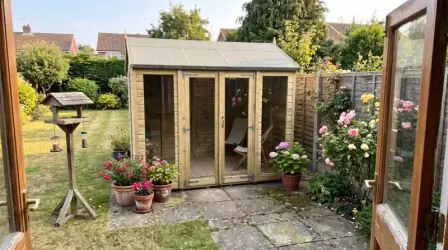
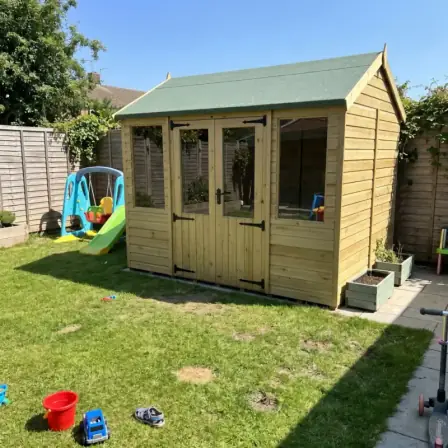
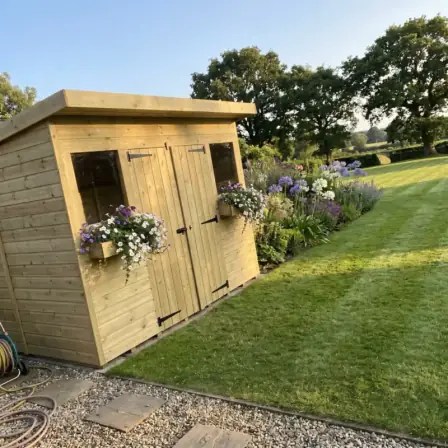
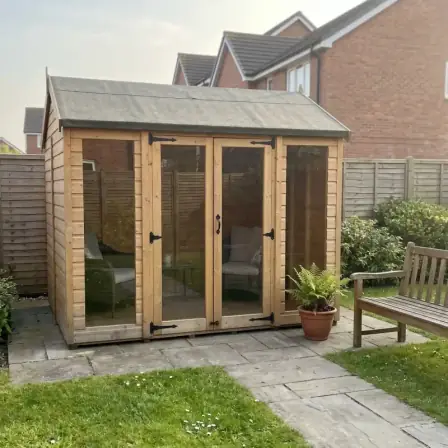
The difference is in the openings. A shed gets a practical door and modest windows — or none at all, where security matters more than light. A summerhouse gets generous glazing and wider door openings, because the whole point is sitting inside with the garden in view.
That's also where the money goes. Like for like on footprint, a glazed panel costs more to make than a clad one, so a summerhouse will typically cost more than a shed of the same size. You're not paying for a better building — you're paying for glass and joinery. Browse the summerhouse range alongside our apex and pent sheds and you'll see the family resemblance straight away.
Four in-between buildings
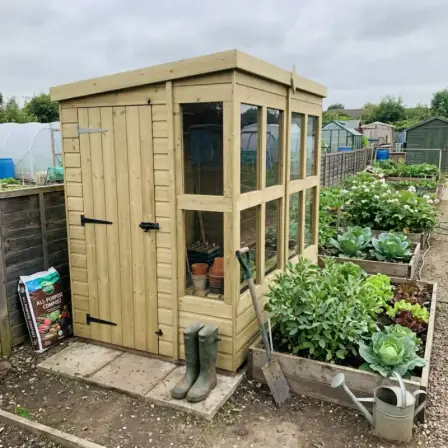
The potting shed
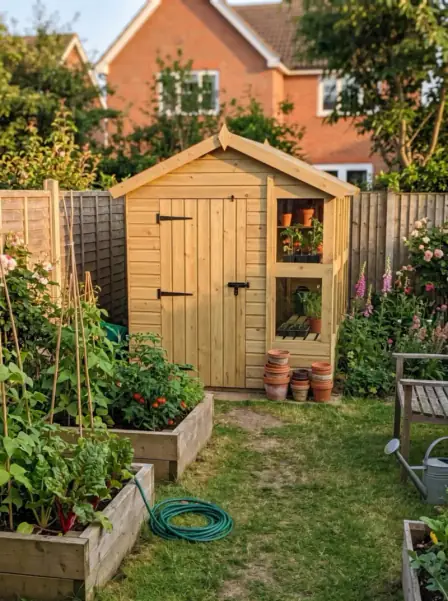
Glazing down one side for seedlings, a bench at working height, storage underneath. For growers it splits the difference perfectly: shed practicality with summerhouse light exactly where the plants need it.
The glazed workshop
A shed at heart, but with big windows over the bench. If you paint, repair or make anything fiddly, steady natural light beats a bare bulb every time — and it's still a working room, not a sitting one.
The partitioned summerhouse
A sitting room at the front, a solid-walled storage bay behind a partition. Plenty of our customers run one: cushions and mower under the same roof, neither getting in the other's way.
The windowless security shed
The opposite move entirely. No glazing means nothing on show and nothing to force — the right call for bikes, power tools and anything else you'd rather keep between you and the door lock.
The first and last of those are ranges in their own right — see our potting sheds and security sheds. The middle two are what the Build Studio is for: windows and doors are placed panel by panel, so you can glaze a shed up toward summerhouse territory or spec a summerhouse with a solid storage end. The names are ours; the layout is yours.
Position decides more than you'd think
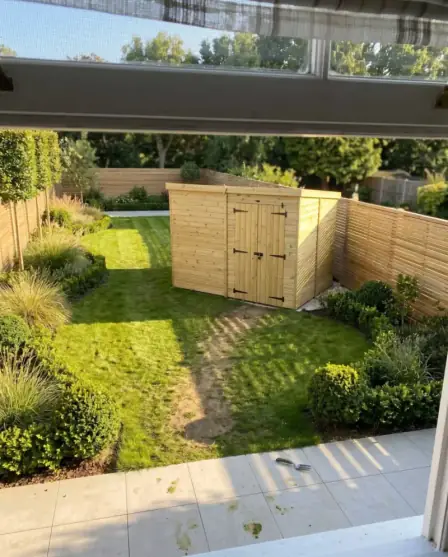
A shed earns its keep by being handy. Put it in the convenient corner — near the gate, close to the house, tucked where you won't mind losing the view. Nobody ever wished the lawnmower were further away.
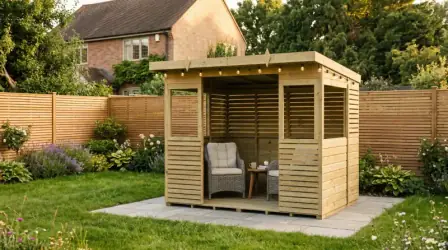
A summerhouse is the reverse. It should sit where the evening sun lands, with its doors facing back down the garden so the view from inside is your borders, not your fence panel. Walk the garden at six in the evening before you decide; the right spot usually announces itself.
Planning rules are the same for both
Whatever you call the building, the planning position doesn't change. Most garden buildings go up under permitted development without an application — the headline rule being a 2.5m maximum height when the building sits within 2m of a boundary. There's no separate category for summerhouses, and glazing makes no difference. The full detail, including the exceptions, is in our planning guide.
Shed vs summerhouse: your questions answered
Can I use a summerhouse as a shed?
Yes — it's the same tanalised frame and shiplap cladding underneath, so nothing about the construction stops you. The trade-offs are practical: all that glazing puts your kit on display, and glass takes up wall space you might want for shelving and hooks. If it's mostly storage with occasional sitting, a shed with an extra window is usually the better buy. If it's mostly sitting, add a storage partition to the summerhouse instead.
Do summerhouses cost more than sheds?
Like for like on footprint, usually yes. Glazed panels and wide door openings cost more to make than plain clad walls, so the more glass you specify, the more the building costs. It isn't a different class of building — frame, cladding and roof are the same — the gap is the glazing and joinery.
Which adds more value to my home?
The one you'll actually use. A well-built, well-kept garden building reads as a plus to buyers either way; a neglected one is a minus either way. Choose for your own use rather than a future valuation — a summerhouse you sit in every warm evening beats a shed full of things you've forgotten you own.
Can I sleep in a summerhouse?
An afternoon doze, by all means. As a bedroom or guest accommodation, no — garden buildings put up under permitted development aren't self-contained living space, and using one for sleeping brings building regulations and usually planning permission into play. Our summerhouses are built as leisure rooms, not bedrooms; if you need habitable space, talk to your local authority first.
What's the difference between a shed with big windows and a summerhouse?
Less than the names suggest. A summerhouse leans into glazing, wider doors and a sunny position; a heavily glazed shed keeps a working layout with better light over the bench. Because the Build Studio places windows and doors panel by panel, you can push a shed most of the way to summerhouse territory — the label matters far less than the layout.
The 60-second decider
Answer these honestly and the building largely picks itself.
- What will you do in it three Saturdays out of four — store and make, or sit and unwind?
- Would big windows help you, or just show off your tools to the neighbourhood?
- Where does the evening sun land — and is that spot free?
- Is the best position a handy corner (shed) or the best view in the garden (summerhouse)?
- Growing from seed? A potting shed may beat both.
- Need both jobs done? Partition a summerhouse or glaze up a shed.
- Within 2m of a boundary? Keep it under 2.5m high and check the planning guide.
- Still torn? Spec one of each in the Build Studio and compare like for like.
Design it your way in the Build Studio
Pick a footprint, then place doors and windows panel by panel — glaze it up into a summerhouse, keep it windowless for security, or land anywhere in between. Every building is made to order in our West Midlands workshop, with free UK mainland delivery.
Open the Build StudioReady to put it into practice? Every building is made in our West Midlands workshop with free mainland delivery.
Browse buildings →