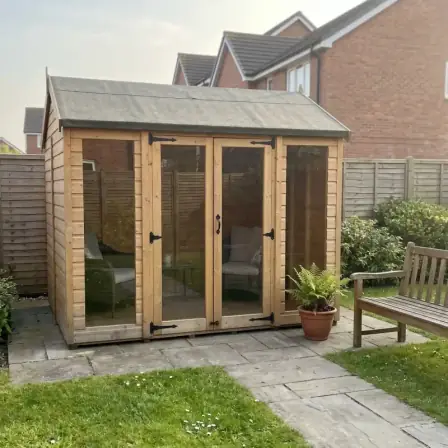
Cladding
Tanalised Shiplap Cladding
16mm nominal shiplap board, standard on every timber building.
Why we build with this
Shiplap is the board British sheds grew up on, and we kept it for good reasons: the tongue-and-groove overlap throws off rain, the profile stays flat across a wall, and it takes colour beautifully. We run it at 16mm nominal rather than the thinner boards budget sheds use, and every length is pressure-treated before it's cut — so the protection lives inside the wood, not painted over the top.
Dimensions
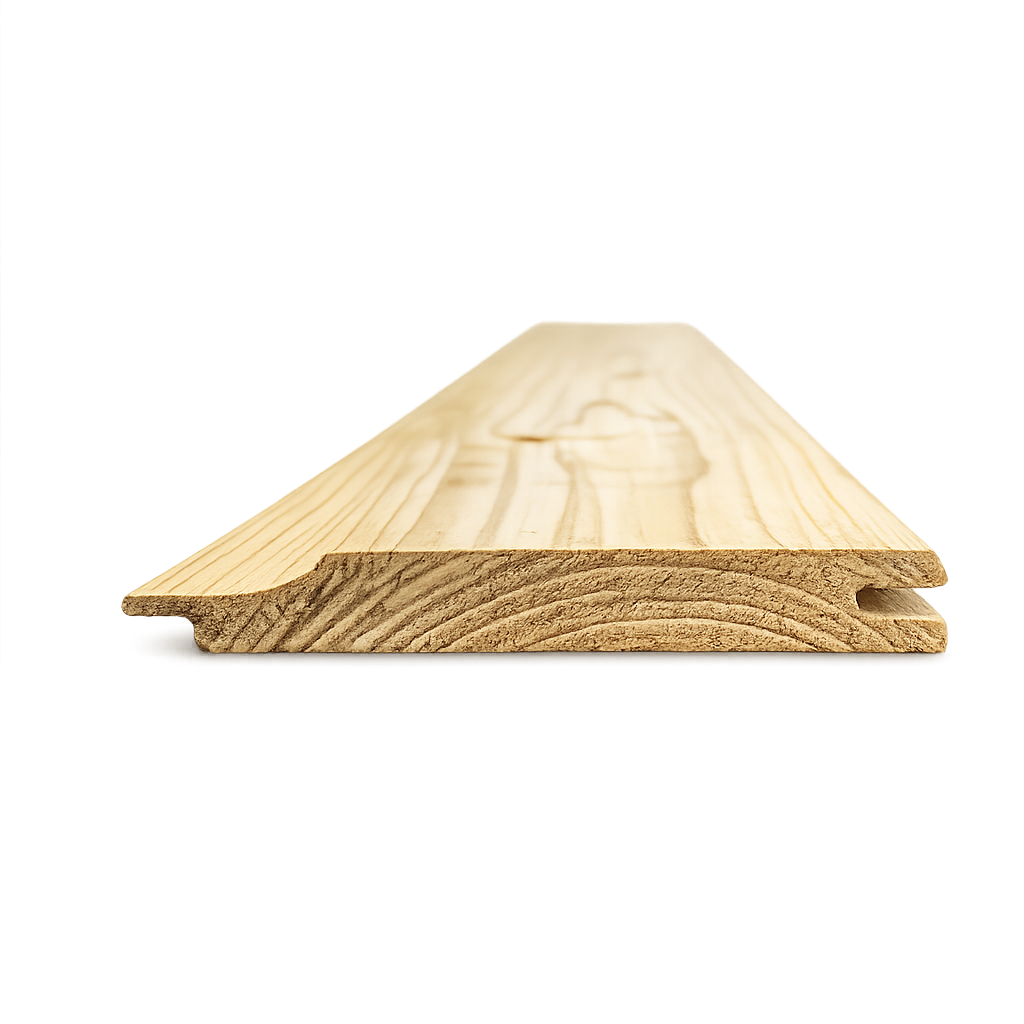
16mm nominal (around 12mm finished) tongue-and-groove shiplap board
Measurements
Shiplap board shown in cross-section — the tongue-and-groove overlap that sheds rain.
Nominal is the sawn size before the board is planed; finished is the actual thickness you receive, once it’s planed smooth (and, on cladding, cut to its tongue-and-groove profile). Every timber mill works this way — we publish both so you know exactly what you’re getting.
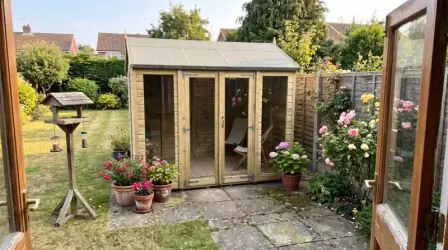
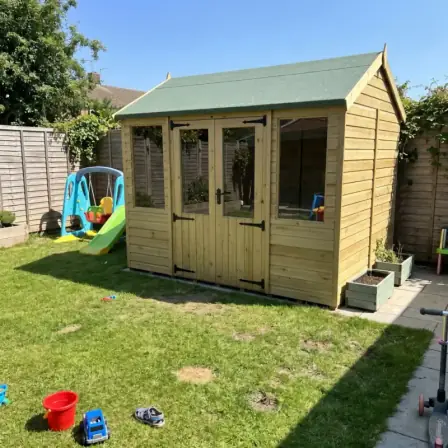
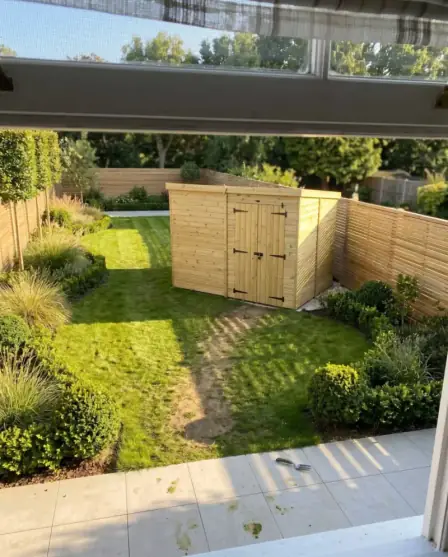
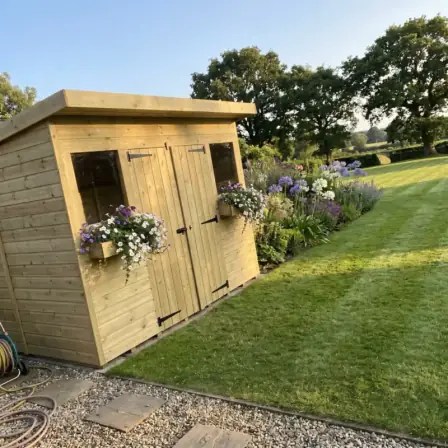
Every standard timber building in the range is clad in 16mm nominal Tanalised shiplap — tongue-and-groove board with the traditional overlapping profile. "Nominal" is the sawn size before planing; once machined smooth and cut with its tongue-and-groove edge, the board finishes at around 12mm. Every timber manufacturer works this way, but most only quote the bigger nominal figure — we publish both so you know what you're actually getting.
Benefits
- The classic timber shed look, with visible overlapping board lines
- Vacuum-pressure treated with Tanalith E before it leaves the workshop
- The widest size and door choice of any range
- The lowest starting price point in the range
Worth knowing
- Needs an optional colour treatment every 2–3 years to keep its finish
- Can silver-grey over time if left untreated — cosmetic, not structural
- Timber moves slightly with the seasons, like any real wood
Used in
See it in a real building. Design a building in the Build Studio and this material appears in the price and the spec, live.
Open the Build Studio →