Buying Guides · 6 min read
What Size Shed Do I Need? A UK Guide from 6x4 to 12x8
Not sure what size shed you need? A straight-talking UK guide to 6x4, 8x6, 10x8 and 12x8 sheds, plus a 15-minute method to get it right first time.
Straight Answers
How to Choose the Right Shed Size
A shed a foot too small is a daily annoyance; the right one disappears into your routine. Here's how we size them properly — with a tape measure, a ball of string and fifteen minutes on the lawn.
The short version, from three decades of building sheds in our West Midlands workshop: lay out everything you plan to store, then add a third. That third covers walking room, the door swing, and the things you'll own in five years that you don't own today. The most common regret shed owners report is buying too small — we have never once heard the opposite.
Shed sizes are quoted in feet, width first then depth, and they're nominal. Below: what each size genuinely holds, how to find yours in fifteen minutes, and what to check before you order.
The popular sizes and who they fit
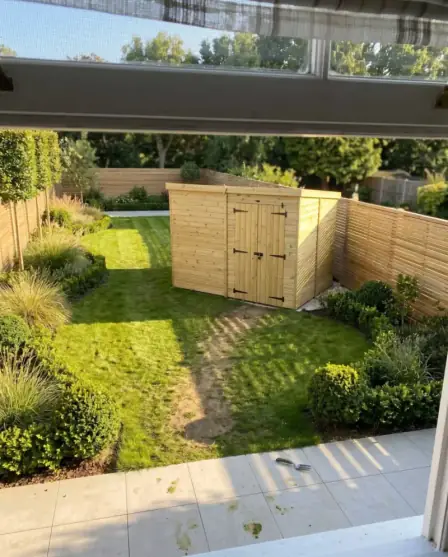
6x4 — the tight-garden workhorse
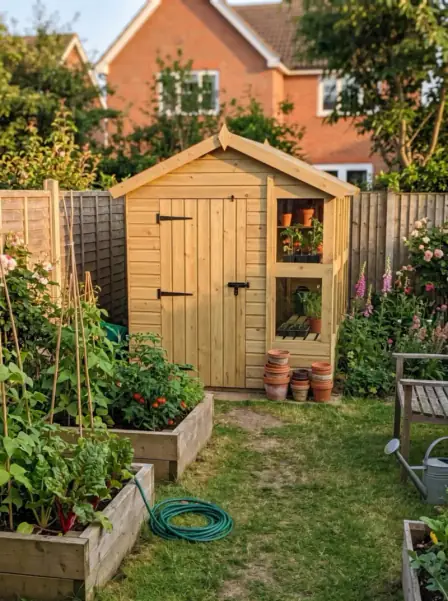
Takes a push or small rotary mower, a full set of hand tools on wall hooks and a shelf of pots and feeds. The right call where every foot of lawn is precious — just accept you'll be reaching in rather than walking in once it's loaded.
8x6 — the UK's most popular size
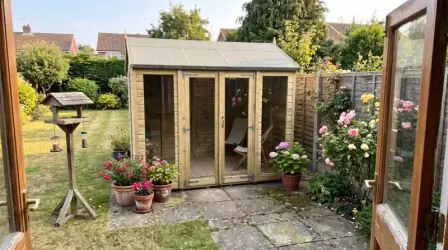
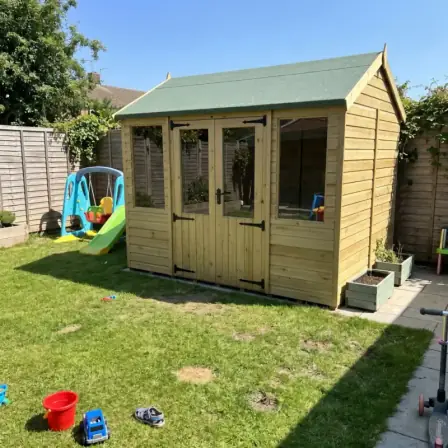
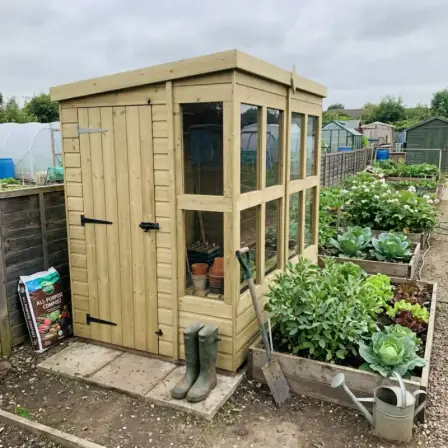
The all-rounder most British gardens settle on: mower, tools, the barbecue cover and the folding chairs, with enough floor left to step inside and actually find things. If you're not sure where to start, start here.
10x8 — bikes plus a bench
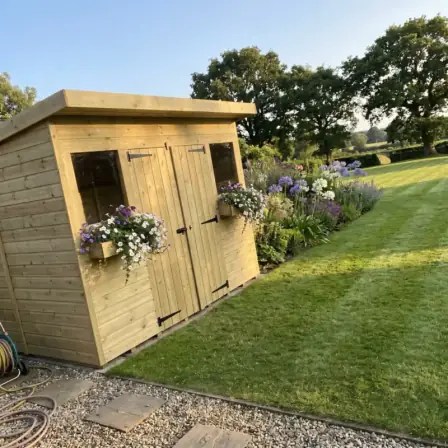
Swallows the family bikes without a nightly game of Tetris and still leaves a full wall for a workbench or potting bench. This is where a shed stops being pure storage and starts earning its keep.
12x8 and up — workshop territory
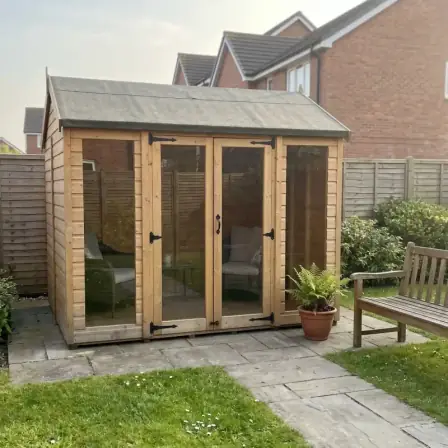
A proper bench, machinery and timber storage down one side, the mower and bikes down the other. If you plan to spend Saturday in the shed rather than just fetch things from it, this is your bracket.
Size it in fifteen minutes
No formulas and no guesswork — a tape measure, some string and your own lawn.
- 1
Lay it out on the lawn
Bring out everything the shed will hold — mower, bikes, tools, cushions, the lot — and set it inside a footprint marked with string at the size you're considering.
Tip: Stand inside the marked rectangle. A 6x4 on paper and a 6x4 underfoot feel like two different buildings.
- 2
Add walking room
You need to reach the back wall without unloading the front. Leave a clear gangway from the door — if the layout only works with everything stacked and squeezed, the size is wrong.
- 3
Think walls, not floor
A foot of wall holds more than a foot of floor. Spades, forks, shears and the strimmer all hang; shelving takes the pots and tins. Plan the walls first and you'll be surprised how little floor the small stuff really needs.
- 4
Check access, door swing and boundaries
Measure the gate or side return the building will come through on delivery day, make sure the door can open fully on site, and leave two feet of working room around the building for maintenance. Within two metres of a boundary, the whole building must stay under 2.5 metres tall.
Careful: Access catches more people out than size does — measure the narrowest point of the route, not the widest.
- 5
Torn between two sizes? Go up
The one rule to take away. Buying too small is the number-one regret customers report, and the step between neighbouring sizes usually costs less than people expect. Nobody has ever complained about the spare foot.
Reading the signs
Signs you should go bigger
- The lawn layout only worked with everything touching
- No gangway was left to reach the back
- You'd be stacking things on top of each other from day one
- Bikes, a bench or a new hobby are on the horizon
- You're already talking yourself into 'making it work'
Signs the size is right
- Everything fits with a clear path to the back wall
- Wall space is left over for hooks and shelves
- The door opens fully without a shuffle
- Two feet of working room clears every side
- It sits comfortably inside any boundary height limits
Before you order: the practical checks
A well-sized shed still needs a clear route in and solid ground under it. Delivery is free across the UK mainland — see how delivery works — but the building has to reach the back garden, so measure the gate or side return at its narrowest point. Then sort the ground: a firm, level base is what keeps a timber building square and dry for decades, and our shed base guide walks through the options.
On boundaries: most garden sheds go up without planning permission, but the height cap is real — within two metres of a boundary the building must stay under 2.5 metres tall. Our planning guide covers the rules in plain English.
Compare sizes the honest way
Brochure grids only tell you so much. In our Build Studio you design the actual building: apex sheds run from 4–10ft wide and 4–20ft deep, pent sheds from 4–20ft wide and 4–10ft deep, all in one-foot steps — so you can nudge the size up and down and watch the price change live. No vague starting prices — you see exactly what your size costs.
Every wall is built from 4ft, 3ft and 2ft panels in our West Midlands workshop — FSC-certified timber on tanalised, pressure-treated framing — and in the Studio you place doors and windows panel by panel. That matters for sizing: where the door sits decides where your gangway goes, and how much unbroken wall you keep for hooks and shelving. Still weighing up styles or materials? Our comparison page sets them side by side.
Shed size questions, answered straight
What is the most popular shed size in the UK?
The 8x6. It holds the mower, the tools and the general garden clutter with room to step inside, without dominating a typical garden. The 6x4 leads in tight town gardens, and the 10x8 takes over once bikes or a workbench enter the picture.
Is a 6x4 shed big enough for a lawnmower?
Yes — a 6x4 takes a push or small rotary mower with room left for hand tools on wall hooks. It gets tight once you add bikes or bulky furniture, though; that's the point where an 8x6 earns its extra footprint.
Do I need planning permission for a big shed?
Usually not — most garden sheds fall under permitted development. The rule that matters most: within two metres of a boundary, the building must stay under 2.5 metres tall, which is one reason pent roofs are popular against fences. Conservation areas and listed properties are the exceptions worth checking — our planning guide covers the detail.
How much gap should I leave around a shed?
Two feet of clear working room on every side. That's enough to re-treat the timber, clear leaves from behind it and keep air moving so the walls stay dry. A shed pushed hard against a fence is the one that rots first.
Are shed sizes internal or external measurements?
Sizes are nominal — an 8x6 is approximately eight feet wide by six feet deep, quoted width first. Treat the quoted size as a close guide rather than a millimetre promise, and remember the roof overhangs the walls, so allow a few extra inches when marking out near fences and paths.
The final five-minute check
Run through this before you order. If every box ticks, the size is right.
- Everything you'll store fits the footprint laid out on the lawn
- A clear gangway runs from the door to the back wall
- Wall space is planned for hooks and shelving, not just floor
- The delivery route is measured at its narrowest point
- The door can open fully on site
- Two feet of working room clears every side
- Under 2.5m tall if it sits within 2m of a boundary
- A firm, level base is planned and ready
- Torn between two sizes? You picked the bigger one
Size it for real in the Build Studio
Set your width and depth in one-foot steps, place the doors and windows panel by panel, and watch the price update as you go — then order with free UK mainland delivery.
Open the Build StudioReady to put it into practice? Every building is made in our West Midlands workshop with free mainland delivery.
Browse buildings →