Treated to the core
Pressure-treated sheds
All timber shed treatments are not the same. A dip-treated shed has been passed through a bath of preservative that coats the surface — and needs re-doing regularly to stay effective. A pressure-treated (tanalised) shed has had Tanalith E preservative forced deep into the timber cells inside a vacuum vessel, so the protection is in the wood, not on it.
Every timber building we make is pressure-treated as standard — the shiplap cladding, the 38×50mm framework and the square-edge floor boards — using timber rated Use Class 3 for outdoor structures. A breathable membrane upgrade, free in the sale, adds extra weather protection behind the cladding (excluding BBQ sheds, outdoor kitchens, glass houses and log cabins), and the building carries a 20-year anti-rot guarantee.
What that means for you is simple: no annual re-treating chore. An optional coat of colour treatment every two to three years keeps the finish looking the way you want it, but the rot protection is built in from day one. Browse the timber range below, or read exactly how tanalising works in our plain-English explainer.
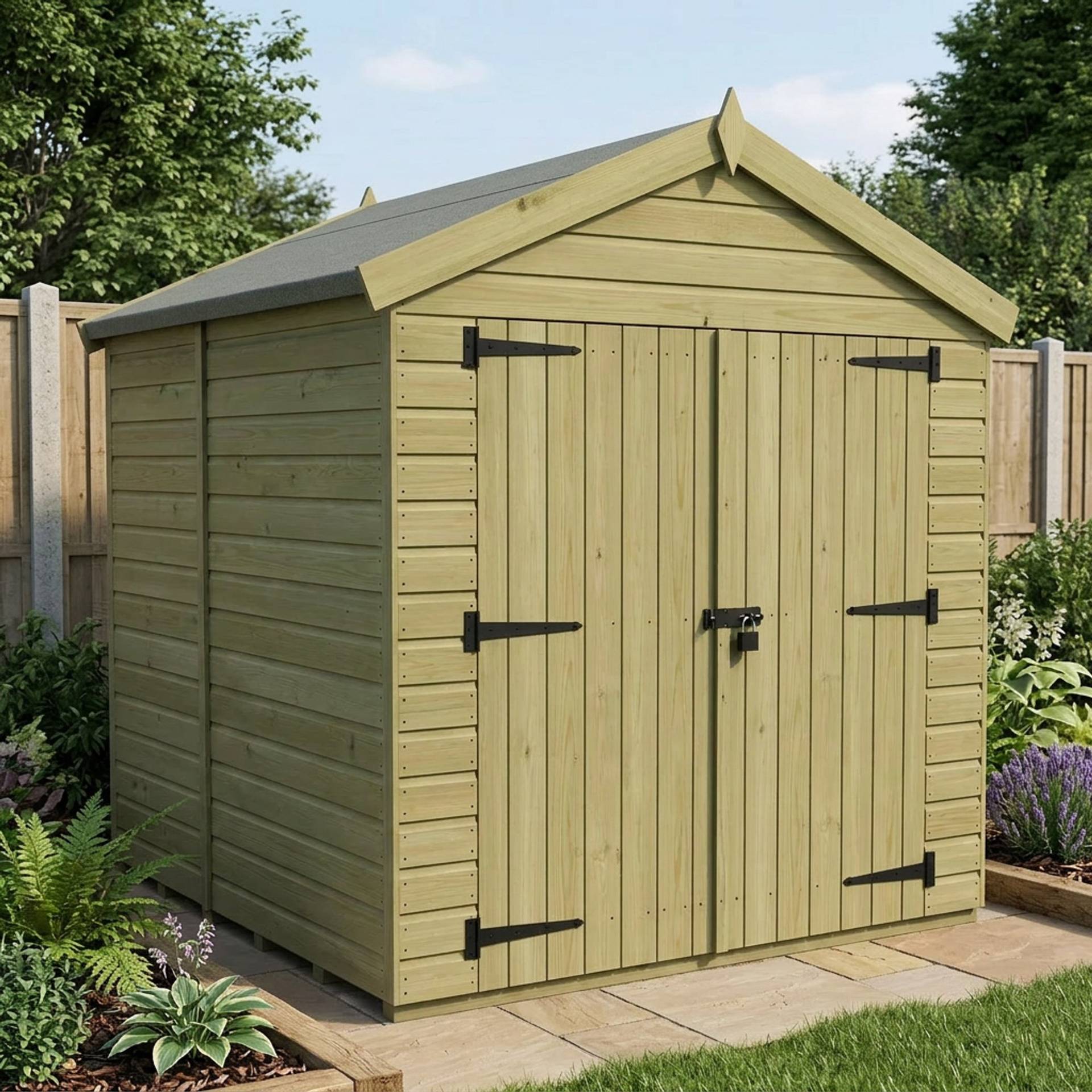
Ready to order

8 x 6 Apex Shed (Double Door, No Windows)
Internal height 1757mm eaves · 2285mm ridge
£977.99
FREE mainland delivery in 2–3 days

8 x 6 Pent Shed (Double Door, With Windows)
Internal height 1887mm front · 1757mm rear
£857.99
FREE mainland delivery in 2–3 days

8 x 6 Pent Shed (Double Door, No Windows)
Internal height 1887mm front · 1757mm rear
£857.99
FREE mainland delivery in 2–3 days

8 x 6 BAR
£1,061.99
FREE mainland delivery in 2–3 days

10 x 8 Pent Shed (Double Door, With Windows)
Internal height 1887mm front · 1757mm rear
£1,277.99
FREE mainland delivery in 2–3 days

8 x 6 Apex Shed (Single Door, With Windows)
Internal height 1757mm eaves · 2285mm ridge
£977.99
FREE mainland delivery in 2–3 days
Good to know
What is the difference between dip-treated and pressure-treated?
Dip treatment coats the surface of the timber and needs topping up to stay effective. Pressure treatment drives the preservative into the timber itself under vacuum, so it cannot wash off or wear away — that is what sits behind the 20-year anti-rot guarantee.
Do I ever need to re-treat a pressure-treated shed?
Not for protection — that is done before the building is made and covered by the 20-year anti-rot guarantee. An optional coat of colour treatment every 2–3 years is purely cosmetic, keeping the timber the shade you want as it weathers.
Which parts of the shed are pressure-treated?
The cladding, the 38×50mm framework and the floor boards are all pressure-treated timber, with a breathable membrane behind the cladding included on top. It is one treated building, not a treated front on an untreated carcass.