Design Inspiration · 7 min read
She Shed Ideas for a UK Garden Escape
She shed ideas with real substance: what these rooms actually become, which building suits which use, where to face it for morning or evening sun, and the colour, textiles and light that work on timber in a UK garden.
Entirely Yours
She shed ideas for a garden escape of your own
What these rooms actually become, which building suits which use, and the style decisions with real substance behind them — from the workshop that builds them.
"She shed" is the phrase people search for, so it's the one we'll use — but what our customers are actually asking for is older and better than any label: a room of one's own, at the end of the garden. Not the kitchen table that must be cleared by six — a separate building, arranged around one person's idea of a well-spent afternoon. We've hand-built these rooms in our West Midlands workshop since 1995, and the pattern is clear: rooms planned around a real use — the sewing machine, the easel, the teapot — are still in weekly use years later; rooms planned as a picture end up storing the lawnmower. This guide is for the first kind.
What these rooms actually become
The reading room
One serious chair angled to the window, shelves on every solid wall, a lamp, a blanket, a door that shuts. The brief is an uninterrupted afternoon.
The craft and sewing studio
The room we're asked for most. It wants wall space more than glazing: a cutting table never cleared, everything visible on rails and pegboard.
The painting space
Steady light beats lots of light. A window turned away from the midday sun keeps colours honest for hours; a floor you may drip on does the rest.
The yoga corner
The design here is empty floor: clear boards, a mat that lives unrolled, morning light coming in low. The room's job is to stay uncluttered.
The potting-and-flowers room
Half growing, half arranging. A bench under glazing for seedlings, buckets of cut stems against a cool solid wall, and soil allowed everywhere.
The quiet cup of tea
No hobby required. A comfortable chair, a tray carried down the path, and a view back up the garden while someone else answers the door.
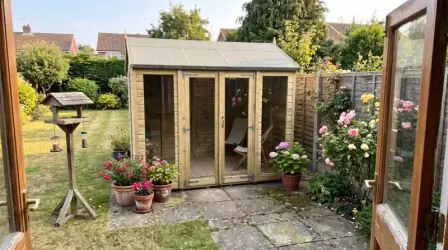
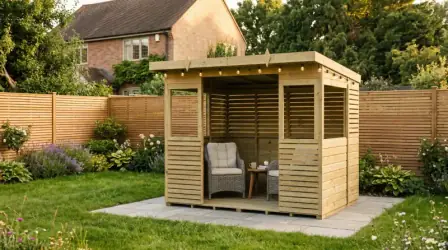
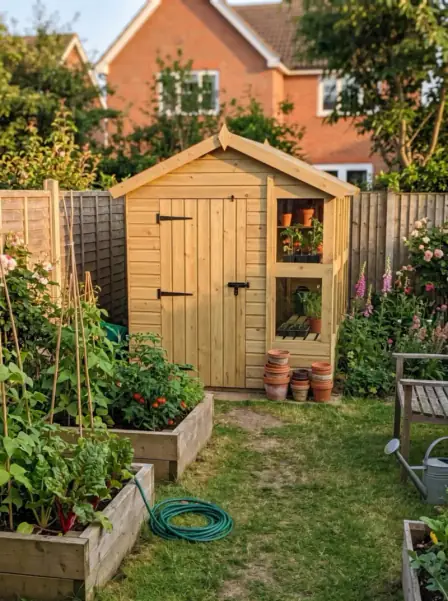
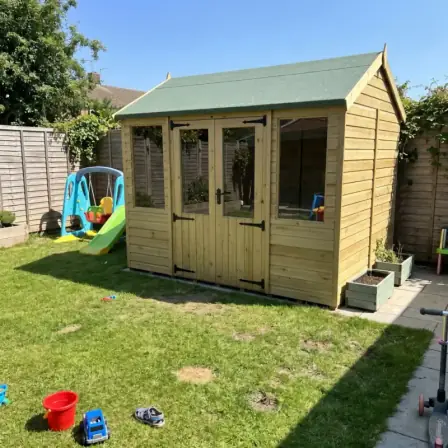
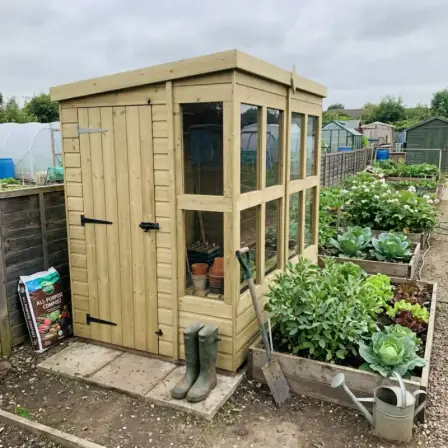
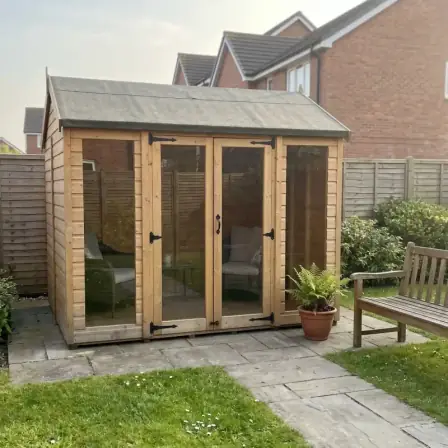
Once you know the use, the building chooses itself. If the use is light — painting, plants, tea with the garden framed in glass — a summerhouse is the natural fit: generous glazing, doors that open the whole room to the lawn. If the use is concentration — sewing, crafts, anything with kit that stays out — a shed is quietly the better room: every solid wall is storage, nobody sees the work in progress, and one well-placed window lights a bench completely. And if the use is growing, a potting shed is the crossover people forget — glazing down one side for seedlings, solid walls for tools. The full comparison is in our shed vs summerhouse guide; either way, the bones are tanalised timber framing with our 15-year anti-rot guarantee.
Morning room or evening room?
Face the morning sun if…
- The room starts your day — yoga, coffee and a notebook before the house wakes
- You sew, paint or make in daylight hours, so it should be lovely from breakfast
- You want gentle light early and a cooler room by mid-afternoon
Face the evening sun if…
- The room opens when the working day shuts — west light keeps it golden into a June evening
- Reading and unwinding are the point; the last sun on your chair is the reward
- You'd like low winter sun warming the room through the glazing
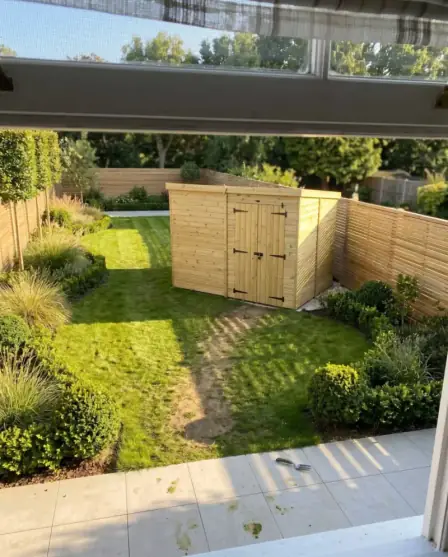
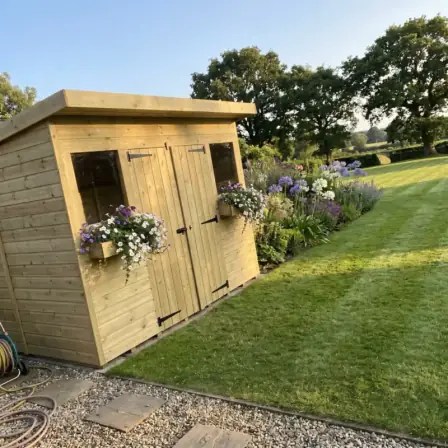
Then stand where the door will be, and look out. That framed view is the picture you'll get every time you sit with the door open, and a few degrees of rotation can swap a fence panel for the best of your borders — it costs nothing but a decision on base day. The full siting walk is in our cosy garden retreat guide.
The style layer: three decisions with substance
Work from the shell inwards — colour first, textiles second, light last — and each layer flatters the one before it.
- 1
Give the timber a colour with intent
Timber takes deep, natural colour beautifully. Sage and olive greens settle a building into its planting; ink and slate blues make white window frames sing; warm clays and creams hold the light on grey days. Inside, go two shades lighter than instinct — small rooms live on bounced light. Our Timber Eco Shield paint comes in five shades chosen against real gardens, not a chart.
Tip: Paint the door a step braver than the walls — one litre of commitment, the whole building's personality.
- 2
Layer textiles like you mean to stay
A UK garden room is layered by season, not decorated once. Start washable — an outdoor-rated rug, cushion covers that shrug off a damp spring — then add the warmth that makes winter visits happen: wool throws, a sheepskin over the chair arm, a heavy curtain across the door that is softness and draught-stopper in one. Natural fibres feel warm the moment you sit down.
Tip: Keep throws in a lidded basket between visits, so damp never gets a head start.
- 3
Light the room for its job, not just brightly
Off-grid covers nearly everything. A craft bench earns one strong rechargeable task lamp, recharged indoors between sessions. A reading chair wants a single warm pool of light, not a lit ceiling. A yoga corner needs almost nothing — dawn is the feature. Evenings want warm-white festoons, or a lantern by the door to walk home by.
Careful: Naked flames, timber walls and wool throws are a poor committee — let battery candles do the flickering.
Comfort deserves honesty. A single-skin timber room is a joy from March to November with nothing but the textiles above; in winter you warm it for the hours you're in it — a small heater on a timer — rather than expecting it to hold heat all day. That's enough for a reading hour or a morning's sewing. If the escape is becoming a daily studio, the year-round answer is an insulated, lined build, covered honestly in our insulation guide.
What separates an escape you love from a shed with a nice chair is fit — the room shaped to the hobby, not the hobby squeezed in. Heights matter most: for seated work at a sewing machine, ordinary desk height (around 72cm) keeps your shoulders down; for standing work — cutting fabric, potting up, framing canvases — the bench should meet the crease of your wrist, nearer 90cm. And a window placed directly over the workbench is the cheapest good lighting there is.
Make it truly yours
The fit-out that turns a building into your room.
- Storage that shows everything: rails, pegboard and shallow shelves, deep boxes only for the out-of-season layer
- A permanent home for the current project, so it never has to be packed away
- One lidded, mouse-proof tin for biscuits, wool and everything else optimists enjoy
- A second chair that has to be earned — company by invitation only
Last, keep it lovely with one honest afternoon a year. The structure is our job — tanalised framing, guaranteed against rot for 15 years — but the finish is a partnership: check the paintwork (the five Timber Eco Shield shades live in aftercare), clear the roof, ease the hinges. The whole routine is in our annual maintenance checklist, and it takes less time than repainting a front door.
She shed questions, answered straight
Do I need mains power for a sewing machine or craft studio?
Not necessarily. A domestic sewing machine draws very little — a mid-sized portable power station runs one all afternoon and recharges indoors overnight, and rechargeable or solar lighting covers the rest. Permanent sockets and a kettle mean armoured cable and a qualified electrician, never an extension lead through a window.
What size does a she shed need to be?
Smaller than the pictures suggest. A chair, shelves and a lamp are happy in a 6x8; a craft studio wants an 8x10 so you can walk around the cutting table; a yoga corner needs clear floor, so think 8x8 upwards.
Does it have to be called a she shed?
Call it whatever you like — the studio, the snug, or simply yours. "She shed" is the phrase the search engines know; what we build is a personal garden room, and the only name that matters is the one your household learns to knock on.
Draw your escape in the Build Studio
Choose the size, put the door where the view is and the window where the bench will be. Hand-built to order in our West Midlands workshop and delivered free across the UK mainland.
Open the Build StudioReady to put it into practice? Every building is made in our West Midlands workshop with free mainland delivery.
Browse buildings →