Buying Guides · 7 min read
Double Glazing for Garden Rooms and Summerhouses: When It's Worth It
Double glazing transforms some garden buildings and does very little for others. What a second pane really does, when it earns its cost, and the questions to ask any maker before you pay.
The Glazing Question
Double glazing in the garden: worth it, or not?
What a second pane honestly does for a summerhouse or garden room, when it repays its cost, and when the money is better spent elsewhere — straight from the workshop.
Ask ten people whether a summerhouse needs double glazing and you'll get ten confident answers, most borrowed from houses. Garden buildings play by different rules. We've hand-built timber and composite garden buildings in our West Midlands workshop since 1995, and the straight answer we give customers is the one that sells fewer upgrades: double glazing transforms some garden buildings and does very little for others. Which yours is depends on how you'll use it, how much of the wall is glass, and what the rest of the building is made of. Here's the full picture, no glazing brochure in sight.
What a second pane actually does
Three things, honestly. First, comfort near the glass. A single pane is the coldest surface in any room, and you feel it from a metre away — cold glass drinks your warmth, and chilled air slides off it as a floor-level draught no sealant can fix; a second pane takes most of that edge off. Second, condensation on the glass. The inner pane of a sealed unit sits closer to room temperature, so breath and tea steam are far less inclined to bead on it. Third, some heat retention — glass sheds warmth faster than any wall it's set into; doubling it narrows that gap.
Now the limit, and it matters more in a garden building than anywhere else. In a house the walls are already insulated, so the windows genuinely are the weak point. In a single-skin garden building, everything is the weak point: uninsulated walls, roof and floor leak heat whatever the glazing does. Double glazing an otherwise uninsulated building is a fine front door on a tent. If year-round warmth is the goal, the envelope comes first — our insulation guide covers that job — and glazing comes after it; our shed vs garden room guide sets out the whole spec gap.
The honest split
Where it earns its cost
- A year-round office or studio — heated daily, hours at a desk beside the glass
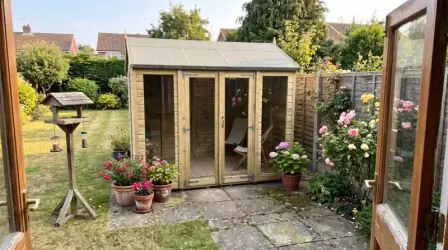
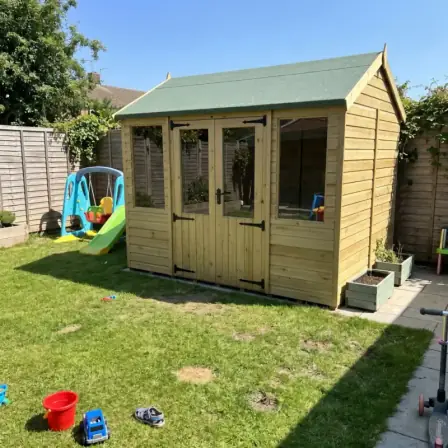
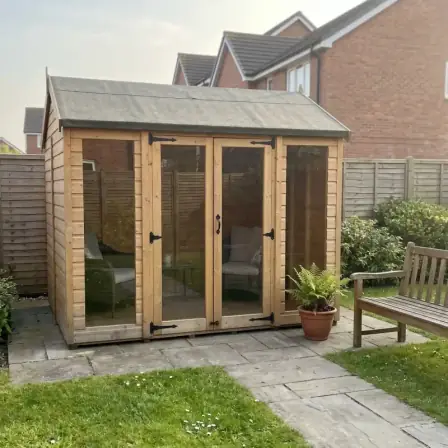
- Summerhouses with large glazed fronts — once half the wall is glass, the glass is most of the envelope
- North-facing or exposed sites that never get the sun's help
- An already-insulated building — now the glazing genuinely is the weak point
- Rooms where you sit still — reading, sewing, working — rather than move about
Where single glazing does fine
- Fair-weather summerhouses used spring to autumn, doors thrown open on the good days
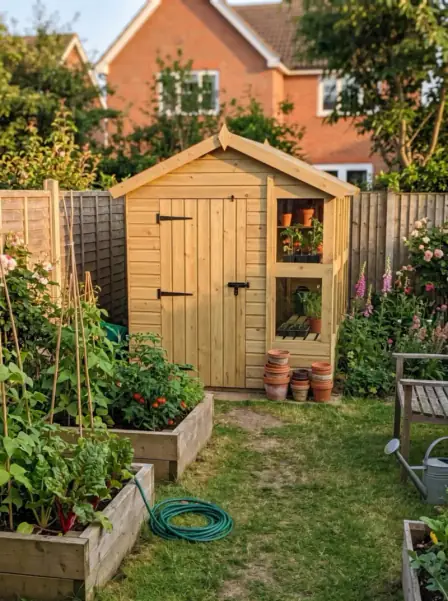
- Potting sheds and growing spaces — plants want light and airflow, not sealed warmth
- Workshops where you're moving, making and generating your own heat
- Storage buildings — the mower has never once complained about the windows
- Budgets that would work harder on the base, the roof or draughtproofing first
The condensation nuance nobody mentions
Double glazing reduces condensation on the pane — and the phrase to notice is "on the pane". The moisture in the air doesn't vanish because the glass got warmer. Water vapour condenses on the coldest surface it can reach, and a single pane at least collects it where you can see it and wipe it. Warm that pane up and the same moisture goes hunting for the next coldest spot: an unlined framing corner, the underside of the roof, the back of the sofa pushed against a wall — places you won't check until they've quietly grown mould.
Treat double glazing as one half of a partnership; the other half is managing the moisture: deliberate ventilation, furniture pulled off the walls, wet kit dried elsewhere. Our ventilation guide walks through the habits that cost nothing — and in a fair-weather summerhouse, those habits alone often make the glazing upgrade unnecessary.
Glass, acrylic or polycarbonate?
Glass — the benchmark
Optically clear for decades and shrugs off cleaning. Specify toughened in doors and low panels — it breaks into blunt granules, not shards. The trade-off is weight: frames and hinges must be built for it.
Acrylic — light and low-cost
Far lighter than glass and kinder than untoughened panes where children play. But it scratches readily — one gritty cloth leaves its history — and larger panes can flex and drum in the wind.
Polycarbonate — the tough one
Extremely hard to break — the honest pick where security or stray footballs worry you more than warmth. Like acrylic it scratches, and it can weather hazy with age.
The sealed unit — the real product
True double glazing is two panes factory-sealed around a dry cavity. The seal is the product: when it fails, the unit fogs between the panes and the only cure is replacement.
Retrofit later, or specify it now?
A sealed double-glazed unit is thicker and considerably heavier than the single pane it replaces, so retrofitting is rarely a matter of swapping the glass. A frame rebated for a single pane usually hasn't the depth for a sealed unit, which means new frames and a joiner — on a small building, frames plus units plus labour can approach what the right spec would have cost at the point of order. There are honest half-steps — secondary panes, a thick curtain on winter evenings, ruthless draughtproofing — worth trying on a building you love before the bigger spend.
If you're buying new, decide glazing at the point of order, while openings, frames and glass are designed as one thing. And whatever glazing you settle on, look hardest at what holds it: a sealed unit is only as good as the frame keeping it square and dry. In our buildings that frame is tanalised timber, carrying a 15-year anti-rot guarantee, and window positions are decided panel by panel in the Build Studio. Browse the summerhouse range to see the glazed fronts this whole question usually orbits.
Five questions to ask any maker
Including us. Good makers answer these without blinking; brochures go quiet.
- 1
Is it a factory-sealed unit?
Two panes sealed around a dry cavity is double glazing; two loose panes in one frame is not. Ask who manufactures the sealed units and what cover applies to the seal itself.
Tip: Misting between the panes — not on them — is the tell-tale of a failed seal.
- 2
Is the frame deep enough?
A sealed unit needs real frame depth — room for the unit, beads and seals without forcing. A single-pane frame with a unit squeezed in is a failure waiting for its first winter.
- 3
How does water get out?
Every glazing system lets some water past eventually. Good frames expect it — drained rebates, drips that throw rain clear of the sill.
Careful: Water sitting against a unit's bottom edge is the quickest way to kill it — if the maker can't explain the drainage, assume there isn't any.
- 4
Toughened where it matters?
Glass in doors, beside doors and anywhere low enough to fall against should be toughened. In outbuildings it isn't a given — ask rather than assume.
- 5
Can one unit be replaced on its own?
Sealed units have finite lives; frames shouldn't. Ask whether a fogged unit can come out and a fresh one go in without rebuilding the wall around it.
The glazing question, answered straight
Will double glazing alone make a summerhouse usable in winter?
No — and we'd rather say so plainly. Glazing is one part of the envelope; if the walls, roof and floor are single-skin, the building follows the outside temperature whatever the windows do. Double glazing earns its place as the finishing move on an insulated building, not as a substitute for one.
Does double glazing stop condensation?
It largely stops condensation on the glass, because the inner pane stays nearer room temperature. The moisture is still in the air, though, and will settle on the next coldest surface unless managed — keep the ventilation habits going after the upgrade.
Is acrylic or polycarbonate a substitute for double glazing?
They solve different problems. Plastics earn their keep on weight, toughness and safety — a sensible choice where children play or security is the bigger worry. For warmth and long-term clarity, a sealed glass unit in a proper frame is the tool for the job.
Deciding glazing at the point of order?
Design the building around the light: pick a footprint, place doors and windows panel by panel, and have it hand-built to order in our West Midlands workshop — free delivery across mainland UK.
Open the Build StudioReady to put it into practice? Every building is made in our West Midlands workshop with free mainland delivery.
Browse buildings →