Design Inspiration · 6 min read
Garden Gym Ideas: Turning a Shed into a Home Gym That Works
No commute, no queue for the rack, and 6am sessions that wake nobody. A maker's guide to the garden gym — why the floor comes first, how to manage sweat, and sizing by the way you train.
No commute, no queue
Turning a garden building into a home gym
Where the weights go, why the floor comes before the kit, and how to stop sweat becoming a damp problem — from the people who build them.
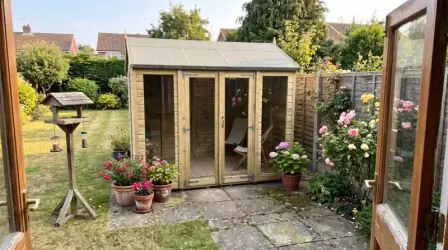
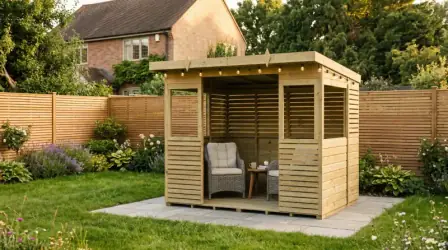
Of all the jobs our buildings get put to, the garden gym might be the one that earns its keep fastest. The commute is twenty paces across the lawn. Nobody is queueing for the rack. You can train at six in the morning without waking the house, and the kit is always set up exactly as you left it, because you're the only member. Skip a week and the building doesn't bill you for it.
We've hand-built garden buildings in our West Midlands workshop since 1995, and a fair number leave destined to hold iron. The ones that work share the same decisions in the same order — floor first, air second, kit last. The ones that struggle went straight to the kit.
Size it by how you train
Don't size a gym; size your training. Mat work — yoga, stretching, bodyweight circuits — needs less room than people think: space to lie down with your arms spread and a little air around you, and low eaves stop mattering once you're on the floor. Free weights need more: it isn't the dumbbells, it's the swing room around them, and a bench wants clear space at both ends of the bar. Cardio machines print their footprint on the spec sheet, but you stand beside a treadmill to get on it — allow walking room, not just parking room.
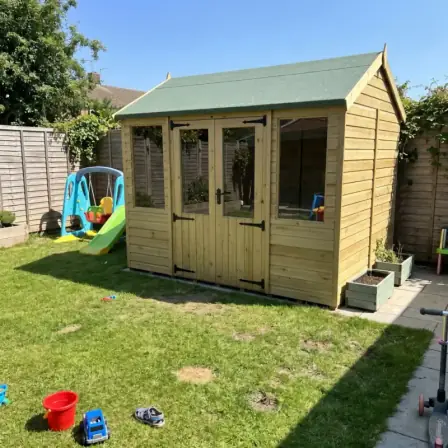
Then there's the rack, which wants headroom before floor: an overhead press happens standing, and a pull-up puts your head above the bar. Roof shape earns its keep here. An apex roof gives you a ridge to stand the rack under; a pent slopes from a tall wall to a shorter one — rack at the tall side, mat at the low side. Check the eaves and apex heights for your size in the Build Studio before you commit to a footprint — and measure your barbell; it's longer than the room you're imagining.
The floor question — settle it first
Weights concentrate load into small, hard points. Everything underneath has to be ready before the first plate arrives.
- 1
Start under the building
A gym asks more of its base than any other use we build for — the loads are heavier, and they move. Get a solid, level foundation down before delivery day; our <a href="/how-to-prepare-shed-base">base preparation guide</a> covers the options honestly.
Tip: Level matters twice: for the doors, and for the bar — you'll feel a lean long before you see it.
- 2
Have the heavy-setup conversation
A well-built timber base suits mats, a bike and a bench, and keeps the building out of the wet. Once a loaded rack and a serious plate collection enter the plan, it becomes a timber-versus-concrete conversation — our <a href="/knowledge-centre/timber-base-installation">timber base guide</a> is where to have it.
- 3
Layer the floor inside
Rubber gym tiles over the timber floor protect the boards, deaden the noise and spare your joints. Cover the whole training area, not just under the bar — kit wanders.
- 4
Spread the load under anything heavy
A rack sends its whole working load through four small feet. A stout board underneath spreads that across several joists instead of one point on one board — same trick under plate storage.
Careful: If the floor bounces or the base is out of level, fix it before you train — a rack that rocks is not a small problem.
Sweat is a moisture problem — treat it like one
An hour of training puts a surprising amount of moisture into the air — breath and sweat, rep after rep — and a small, well-sealed building holds onto every drop. Left unmanaged, it comes back as condensation on every cold surface: the window, the mirror, your bar. In a gym, ventilation isn't a comfort feature; it's non-negotiable. Air needs a way across the building — vents, a window you can crack mid-session, the door ajar while you warm down. Our ventilation guide covers getting air moving without inviting the weather in. The building can take it — our tanalised framing carries a 15-year anti-rot guarantee — but your bar and mirror can't.
Insulation is the other half if you mean to train year-round. An uninsulated shed is honest fair-weather training space — training warms you faster than any heater — but an insulated, lined building works in February without your breath fogging the mirror mid warm-up. The full job is in our insulation guide. And insulating makes ventilation more important, not less. Sealed and sweaty is how mould starts.
Light and power, honestly
You'll want light for dark mornings, a socket for the fan and the speaker, and possibly power for a treadmill — which draws more than people expect. None of it is a DIY job: garden electrics are notifiable work, so use a qualified electrician who can certify the installation — and book them before the kit goes in, while the building is empty. And no extension lead across the lawn as a temporary fix — it never stays temporary.
Kit that survives an outbuilding
Habits that keep rust off
- Wipe the bar down after every session — sweat is salty, and knurling holds it
- An occasional light oil on the bar, brushed into the knurl
- Store plates racked, not stacked on the floor
- Cover cardio machines between sessions — electronics mind damp more than cold
- Air the building after every session
What we'd think twice about
- Cheaply chromed kit — it pits fast in damp air
- Damp gloves, straps and towels — they go back to the house
- A treadmill left uncovered through winter
- Anything you'd mourn, until the locks below are sorted
Worth stealing, easy to carry
Be straight about what the building now holds. Nobody hauls plates over a fence in a hurry — but a decent bar, a bike or a turbo trainer is compact, valuable and easy to sell on. Treat the gym like a workshop full of tools: proper locks, fixings that can't be unscrewed from outside, and a building that doesn't advertise its contents through a bare window. Our security guide covers the lot — and a bike deserves an anchor inside, not just a locked door in front of it.
Design touches that earn their place
The mirror wall, honestly
A mirror is the first surface to fog in a badly ventilated building, so sort the airflow before the glass. Fix it through the lining into the framing and it will serve for years.
Music without enemies
A small speaker is plenty in a timber room — and walls carry bass further than you'd think at six in the morning. Keep it modest and the neighbours stay friendly.
The door swing
Plan the layout around the door's arc before anything is bolted down. The Build Studio places the door panel by panel — put it where it won't argue with the rack.
Before the first plate goes in
Ten minutes with this list saves a floor, a mirror and a bar.
- Base down, solid and level — checked with a level, not an eye
- Rubber flooring across the whole training area
- Load-spreading board under rack and plate storage
- Ventilation planned in — air must cross the building
- Electrician booked before the kit arrives
- Door swing checked against the layout
- Locks and anchor points fitted before expensive kit moves in
Garden gym questions, answered straight
Will a timber floor really take a squat rack and plates?
With the groundwork done, yes. The sequence matters: a solid, level base under the building, rubber flooring over the boards, and a load-spreading board under the rack so its feet push through several joists rather than one point. For a very heavy setup, have the timber-versus-concrete conversation before you order, not after.
Do I need to insulate before I can train in it?
No — training generates heat faster than a small room loses it; plenty of people train in an uninsulated building most of the year. Insulation earns its keep in deep winter and shields kit from damp and temperature swings. Ventilation you need from day one, insulated or not.
Is a shed gym safe for a treadmill or a smart bike?
The machine minds damp far more than cold. Give it a professionally installed socket, a cover between sessions and a ventilated building, and it will live happily outdoors. Sealed and sweaty corrodes electronics — the fix is airflow, not a bigger heater.
Give the rack its headroom
Size the building around your training in the Build Studio — apex or pent, doors and windows placed panel by panel, heights shown as you go. Delivery is free across mainland UK, so the budget stays where it belongs: on the iron.
Open the Build StudioReady to put it into practice? Every building is made in our West Midlands workshop with free mainland delivery.
Browse buildings →